


Your Adventure Awaits


An Ancestral Ode
Journey on a pilgrimage through the heart of Minnan and Teochew heritage, tracing the invisible threads of lineage across a landscape of stone and spirit. The odyssey begins in Chaozhou, a chance to reconnect with the significant Teochew heritage and legacies, and thereafter, the path winds into the verdant highlands of Fujian, where the colossal "Tulou" earthen castles rise like sturdy hymns from the soil, their circular walls cradling the collective memory of clan life and architectural ingenuity. The journey finds its crescendo in the ancient port city of Quanzhou, the "Zayton" of antiquity, where the salt-air breeze carries the scent of incense from weathered temples and echoes of a maritime empire. Here, amidst the red-brick artistry of traditional courtyards and the enduring grace of the Twin Pagodas, we step into a living lineage — a profound homecoming that honors the endurance, artistry, and soul of our ancestors.
History & Culture
China
Price On Request
When To Go?
Highlights
Accommodations
A potent blend of heritage, architecture and modern comfort allows us an immersive understanding of the influence of a bygone era, reminiscent of the bold and enduring spirit of ancestors who first made the move across "Nanyang"
Experiences
No other journey in the world allows a privileged deep insight into one of the largest mass-migration that ever occurred. On this journey, we get the chance to explore the vindicated decision-making of our ancestors that had since spread far and beyond to Southeast Asia.


Itinerary
DAY 1: Arrive Chaozhou
.png)
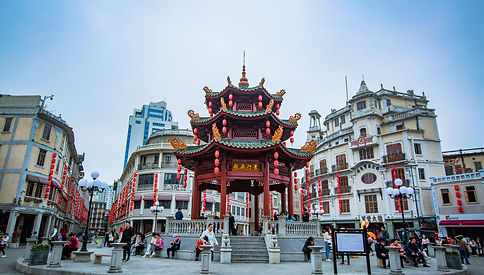
We arrive into Jieyang Chaoshan International Airport today and soon after, we drive into the heart of Chaozhou, stronghold of the Teochew people and adorned with a strong heritage of the Ming and Qing dynasties. We begin our visit at the Guangji Gate Tower, the most majestic and spectacular of the seven gates of Chaozhou, built during the Ming Dynasty in 1370. From here, we will cross the stunning Guangji Bridge, one of four historical bridges in China built in 1171 during the Southern Song Dynasty. Originally a floating bridge made of 86 boats, it was reimagined
over the centuries with stone piers, arches, pontoons and pavilions. Designated as a national key cultural relic, the bridge is now a symbol of remarkable engineering achievement.
Later, we continue to Paifangjie Street, a 2km historical street named after the 22 remaining memorial arches lined along
the main street sandwiched by shops selling various products such as wood carvings, wooden molds, porcelains, and local snacks. Witness a long line of old “Qilou” arcade buildings dating back to the early 20 Century, intricate stone carvings and beautiful calligraphy creating an amazing corridor of art.
Finally, we retreat to the Jiangnan House Chaozhou, our abode for the next 2 nights. Enjoy an insightful stay in the "albergo diffuso" styled hotel, scattered over a number of heritage buildings harmoniously blending Teochew culture with modern sophistication.


DAY 2: Chaozhou (Excursion to Longhu Ancient Village & Shantou)
After a good rest, we start the day with an excursion to the historic Longhu Ancient Village, dating back to the Southern Song Dynasty featuring over 100 well-preserved ancient buildings laid out in the pattern of the Eight Diagrams with cobblestone streets winding through the village, showcasing architectural styles from different dynasties and the fusion of Eastern and Western influences in overseas Chinese buildings.
Next, continue to the impressive Former Residence of Chen
Cihong, built in memory of the great overseas businessman. The expansive complex spans 25,400 sqm including four courtyards and more than 500 rooms embodying spectacular architectural features of Chaoshan residences. In addition to preserving its original appearance, the mansion also houses exhibits that reflect the traditional folk culture and heritage of Chaozhou.


Our journey then continues south into Shantou, where we explore the nostalgic Old Town that traces back to the Ming Dynasty when it was a fishing village called "Chaoyang Fishing Harbor" before gaining importance as a seaport for merchant ships during the Qing Dynasty. It was during this time that
modernization began with an array of foreign-built consulates, banks, churches and other buildings here, forming a "foreigners' street" with a western style. At the same time, many overseas Chinese returned to their hometowns to set up schools, hospitals, charitable organizations and other public welfare undertakings, which contributed to the social development of
Shantou Old Town.
On our return back to Chaozhou, we will savor to Chaozhou’s hidden culinary gem at the Shan Hai Li Restaurant. Nestled at the foot of Yan Feng Mountain, the restaurant rests against its verdant, ink-wash slopes, with a tributary of the Han River meandering nearby. Enjoy a mesmerizing experience admiring the striking modern architecture and sense of space in the grounds of the restaurant while indulging in an array of spectacular Teochew cuisine.

DAY 3: Chaozhou / Raoping / Wulin
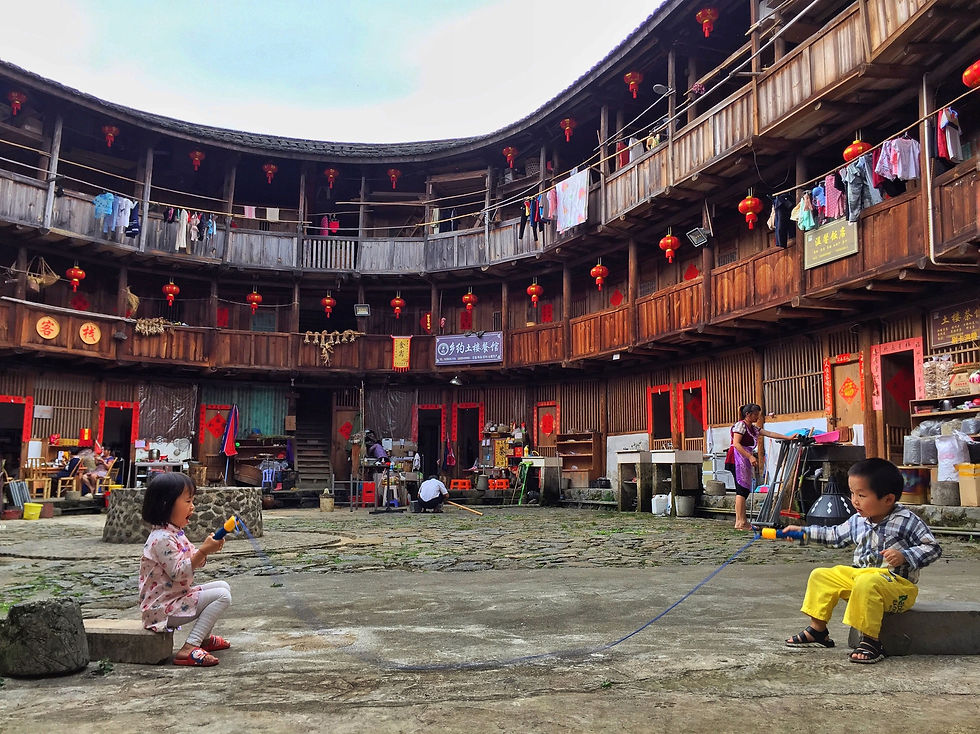
We leave Chaozhou today and on an hour's drive, we arrive at the Daoyunlou, China’s largest octagonal Hakka Tulou residence. First built in 1587, the compound spans over 10,000 sqm in the shape of the "Bagua" Eight Trigrams, the eight combinations of three whole or broken lines which were used by ancient Chinese people in their divination. On an immersive exploration, we enjoy the chance to visit the living quarters and interaction with locals to understand the longstanding heritage and traditions.


Thereafter, we continue north , eventually crossing into Fujian Province where we stop at the spectacular Chuxi Tulou cluster. At a first glance, we will witness a group of 30 Hakka tulou representing a spectrum of architectural styles - circular, square, rectangular, oval and hexagonal designs built since the Ming Dynasty. We will enjoy the opportunity to visit some of these tulou, including the Jiqinglou, the most cherished tulou in the cluster for its structural sophistication as well as featuring the Hakka Folk Museum. We will visit the Shengqinglou as well, designated as the martial arts quarter in the cluster, renowned as the gathering space for combat skills practicing and community defense.
Our day culminates in our arrival at the Tsingpu Tulou Retreat. Carefully restored from five Fujian tulou buildings by architect Hua Li, enjoy the immersive experience of staying in a retreat built to showcase the extensive heritage and lineage of the Hakkas.


DAY 4: Wulin
We have another exceptional day to experience the Hakka heritage and we begin with the undoubted Tianluokeng Tulou Cluster. From a panoramic perspective, we will witness the "Four Dishes & One Soup" layout of four circular and one square tulou buildings that is one of the most photographed and visited in the province. Our insightful visit will take us through each individual tulou, greeted by friendly locals still living harmoniously and performing everyday chores.
Later, we stop in Taxia Village where we learn about interesting anecdotes where villagers in the entire village are surnamed "Zhang". It is said that the Zhang ancestors went abroad for work in the early years and traveled back to the village after gained a lot of money. And then they built road and bridges in the village, creating great foundation to open hotels to welcome visitors.


DAY 5: Wulin / Xiamen
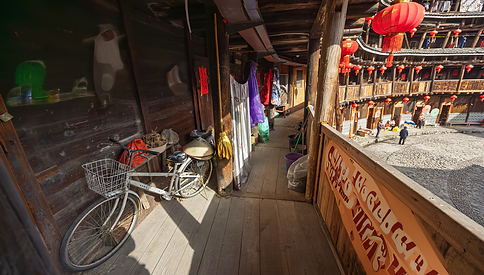
We depart the Tsingpu Tulou Retreat today where we may have more chances to visit some less-visited tulou in the area. We will make a dedicated stop in the picturesque Yunshuiyao Ancient Village adorn with beautiful cobblestone streets, a nostalgic ambiance and the highest concentration of banyan trees in Fujian Province. In the village, we have the chance to explore Huaiyuanlou - the only tulou that has a school built within as well as the Heguilou, built and shaped like an ark on the swampland.
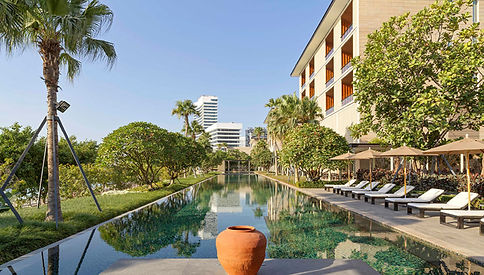
From here, we will drive through the interior heartlands of Fujian and finally arriving into Xiamen, known by its ancient name of "Amoy". An orientation of the city allows us a glimpse into the port city's heritage and influence, combining the essence of the east and west. We arrive at the Lohkah Hotel, nestled between Xiamen's magnificent oceanfront and its most vibrant business district.


DAY 6: Xiamen (Excursion to Gulangyu)
This morning, we embark on an excursion to the UNESCO World Heritage-listed island of Gulangyu via a short ferry from Xiamen. Featuring some of the most diverse heritage and multinational architectural styles as a result of Xiamen's maritime trading, the island has garnered a reputation as the "Exhibition of the World’s Architecture". On a completely flexible basis, we may explore the pedestrian-only island visiting some of the most fascinating sites, buildings and museums including the Sunlight Rock - the iconic monoliths offering the most remarkable views of the island, the picturesque Shuzhuang Garden, once the private garden of Taiwanese merchant Lin Erjia - decorated in impressive Minnan style facing the sea. Not to be missed as well is the Piano Museum, displaying over 70 classic pianos donated by Hu Youyi - an overseas Chinese pianist and piano collector born in Gulangyu Island.
Later, consider a visit to the Organ Museum, the largest organ museum in the world also donated by Hu Youyi. The building of the museum combines various architectural styles, including ancient Chinese architecture, Pakistani mosque, Athenian temple, and Roman Catholic church.
Depending on your interest, we have opportunities to visit various family mansions/residences belonging to the Huang Family, Koh Family or Lin Family tracing the roots of ancestry.


.jpg)
DAY 7: Xiamen / Quanzhou
After 2 nights in Xiamen, we continue tracing the Nanyang ancestry path. Our first stop will be the Tsai Family Residences, an incredible medley of red-brick houses in Zhangli Village, built by Tsai Qichang, a returned Chinese and his son Tsai Chen from 1867 to 1911 during the Qing Dynasty. The sprawling complex consists of nearly 400 buildings arranged in neat rows covering 30,000 square meters. Each residence has multiple entrances, with wooden carved beams, red-tiled walls and roofs adorned with sweeping swallow-tail-shaped ridges.

Shortly, we continue to Wulin Traditional Village that was first established in the late Ming Dynasty and later flourished in the Qing Dynasty. A walk through the beautiful village allow us an insight into the Minnan and Nyonya heritage from which wealthy overseas Chinese return to the motherland to build grand mansions, residences in various architectural styles including Southern Fujian red-brick as well as modern Gothic and Romanesque Western-style buildings.
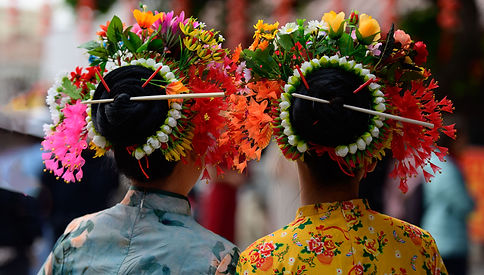
Later, a short drive away arrives us at the unique fishing and port village of Xunpu, renowned for the iconic "Flower Hairpin Headdress" worn by Xunpu women, descendants of ancient Arabs, until today. On our walking discovery, we examine the unique "oyster shell" houses and dwellings of Xunpu, constructed using oyster shells and bricks, utilizing local resources to replace ordinary red bricks with oyster shells. The walls made of oyster shells could reflect sunlight, effectively reducing indoor temperatures and achieving a warm environment in winter and coolness in summer. Take a step back in time to wander through the nostalgic alleys and a chance to learn about the Maritime Silk Road.
Finally, we will arrive in the time-honored city of Quanzhou where we call the Intercontinental Quanzhou Taihe our base for the next 2 nights.
%205.jpg)


DAY 8: Quanzhou
We dedicate the day to uncovering the historic port city of Quanzhou, designated as the starting point of the Maritime Silk Road and considered by Marco Polo as "The Most Prosperous City in the World" at the time. We begin with a visit to the iconic 1,300 year-old Kaiyuan Temple, landmark of Quanzhou and is Fujian Province's largest Buddhist institution. Admire the Eastern Zhenguo Tower, inspired setting of "Black Myth: Wukong", the highly-popular action role-playing game, and the Western Renshou Tower, China's tallest pair of stone towers boasting intricate carvings. Wander around the garden courtyard to appreciate the Grand Hall with Indian “Flying Apsaras Musician and Dancer” carvings, delicate columns with exotic figures, and various Buddha statues. From here, we connect to Zhongshan Road adorn with colonnaded arcade buildings blend Chinese and Western styles with exquisite carving ornaments.

Worth a visit is the Confucius Temple & School, the largest Confucian ancient architectural complex in Southeast China, integrating architectural forms of the Song, Yuan, Ming and Qing dynasties. Admire its shrine, halls, pools, and pagodas with typical colorful Minnan-style roofs.
Later, take a stroll on Tumen Street where we witness an array of cross-cultural influences, featuring religious elements of Buddhism, Islam, Taoism, Christianity, highlighting Quanzhou’s international cultural exchanges during the old days. An undoubted visit is Qingjing Mosque, the oldest in China where historical trade between Quanzhou and merchants from Arabia, Europe and Middle Asia took place.
Not to be missed is Luoyang Bridge built since 1,053 AD, one of China’s “Four Famous Ancient Bridges” and earliest sea-crossing beam stone bridge. Walk along this 731-meter-long structure, seek its excellent architectural skills, and hear its stories during the Maritime Silk Road period and construction directed by Cai Xiang.


DAY 9: Departure Quanzhou
Today, we transfer to Quanzhou Jinjiang International Airport for your flight departure or continue your journey of Fujian Province to Fuzhou. Alternatively, an hour's ferry takes you to Kinmen Island in Taiwan where we continue the legacy of Minnan's heritage and the fascinating but sensitive cross-strait relations that has kept Kinmen at the forefront of possible future warfare confrontation.
Featured Hotels

Lohkah Hotel
Situated in Xiamen’s burgeoning, affluent Huli District, The PuShang Hotel and Spa is a true urban resort, tucked away within its own private coastline at the heart of the city’s new luxury living. With 188 luxuriously appointed guest rooms and suites, the hotel presides over the city’s famed marina, offering stunning ocean views from above. As a host to the unhurried, we invite you to pause within a mindful escape and to uncover the city’s heritage, easing into its tranquil tempo. Setting a new benchmark in the region for resort architecture and aesthetic alike and set within lush tropical landscape overlooking the ocean, guests can enjoy an unparalleled range of facilities and amenities, all meticulously designed and thoughtfully and expertly executed to cater to the most discerning of travelers. State of the art facilities and technology seamlessly blend into the soothing qualities of a resort, blurring the line between in and outdoor luxury living and forming the perfect home for both, corporate and leisure travel.

Intercontinental Quanzhou
InterContinental Quanzhou offers 290 luxurious guest rooms and suites, featuring panoramic city views, local design and modern amenities. Each room is equipped with a digital entertainment system, rainforest showers, ergonomic workspaces, and high-speed internet. The hotel's standout feature is its "In The Know" experience, where staff provide local insights and tips. Located in Tahoe Plaza, the hotel is home to Taifu Restaurant, which specializes in authentic Cantonese cuisine, and is close to historic sites like Qingyuan Mountain and Kaiyuan Temple.

Privileges
Complimentary Breakfast
Priority Room Upgrade at check in*
Early check in/late check out subject to availability*